๐Ÿ“ฐ Enterprise Security Blog

Page 2 of 20

Industrial Routers Under Botnet Attack: Four-Faith and ASUS Vulnerabilities Being Actively Exploited in OT Networks

Industrial Routers Under Botnet Attack: Four-Faith and ASUS Vulnerabilities Being Actively Exploited in OT Networks

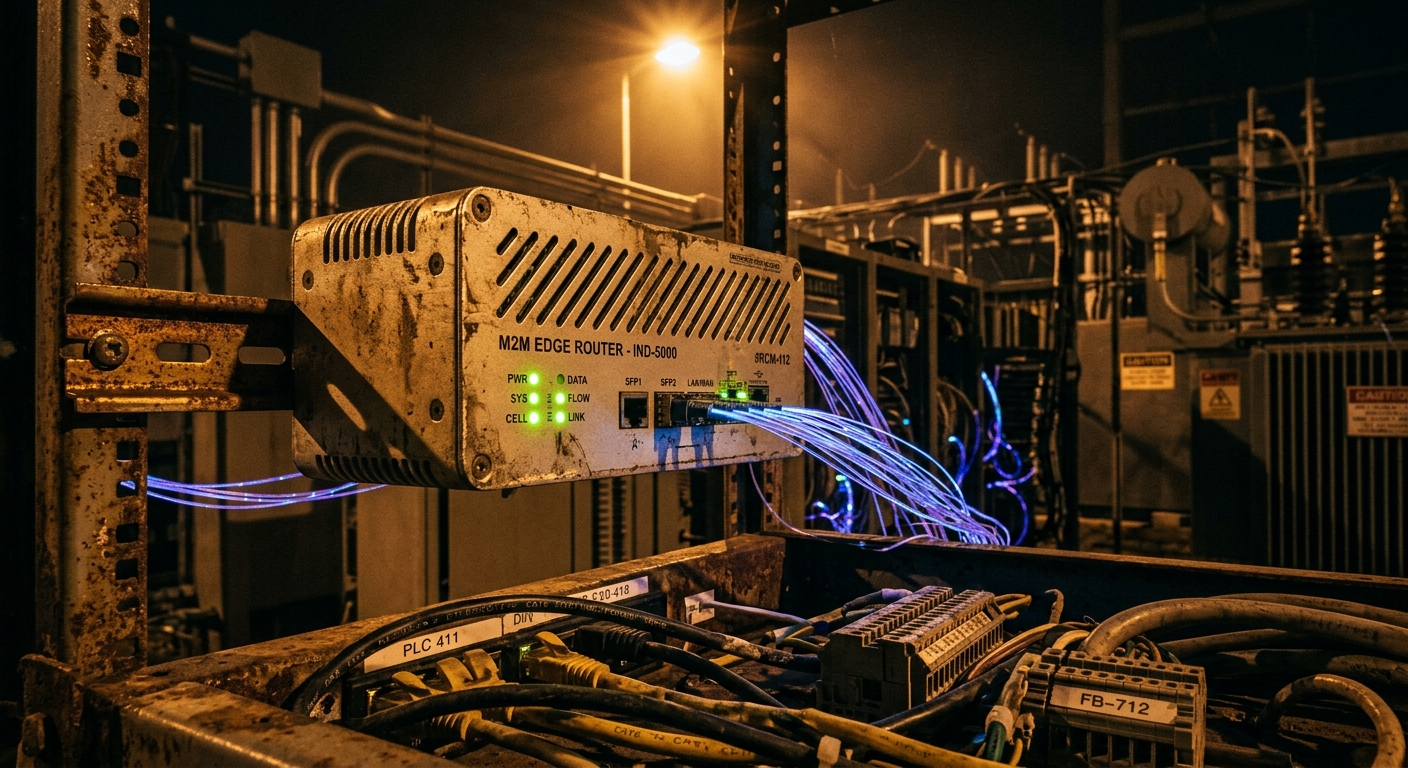
Two vulnerabilities in widely deployed industrial and commercial routers are being actively exploited by botnets in May 2026. CVE-2024-9643 in Four-Faith F3x36 Industrial Cellular Routers, scoring 9.8 on CVSS, allows full administrative control without authentication. CVE-2018-5999 in ASUS AsusWRT routers, a vulnerability from 2018, has been re-weaponized by the RondoDox botnet as of May 17, 2026. Both vulnerabilities are being used to build botnet infrastructure, and compromised industrial routers in OT environments create paths from the internet directly into production control systems.

CVSS 10.0: Interlock Ransomware Exploited Cisco's Firewall Zero-Day for Weeks Before Cisco Knew

CVSS 10.0: Interlock Ransomware Exploited Cisco's Firewall Zero-Day for Weeks Before Cisco Knew

CVE-2026-20131 in Cisco Secure Firewall Management Center carries the maximum possible CVSS score of 10.0 and allows unauthenticated remote attackers to execute arbitrary Java code as root via an insecure deserialization flaw. The Interlock ransomware group was exploiting it as a zero-day from January 26, 2026 โ€” more than a month before Cisco disclosed the vulnerability publicly โ€” using memory-resident web shells, custom JavaScript and Java remote access trojans, and Active Directory certificate abuse to move through victim networks.

Routers Are Now the Riskiest Device in Your Network: The 2026 Connected Device Risk Report

Routers Are Now the Riskiest Device in Your Network: The 2026 Connected Device Risk Report

New research tracking connected device risk across IT, OT, IoT, and IoMT environments has named routers the single most dangerous device category in enterprise networks, averaging 32 vulnerabilities per device and accounting for roughly a third of all critical vulnerabilities found in corporate infrastructure. Forty percent of device types on the 2026 riskiest list are entirely new entries, and 75% were not on the list two years ago โ€” a pace of attack surface expansion that most security programs are not designed to absorb.

Smart Office Security Week in Review: The Seven Things That Mattered, April 22โ€“28, 2026

Smart Office Security Week in Review: The Seven Things That Mattered, April 22โ€“28, 2026

This week produced a joint intelligence advisory on Chinese state-sponsored IoT device hijacking, a major Cisco wireless security report confirming that 85% of organizations are getting hit through wireless and IoT, critical vulnerabilities in Siemens industrial edge and building automation systems, a landmark workforce report linking skills gaps to real breaches, and a new NIST initiative on OT network visibility. Here is what it means for organizations running connected office environments.

The OT-ISAC Advisory and the Hidden ICS Vulnerabilities in Your Smart Building Infrastructure

The OT-ISAC Advisory and the Hidden ICS Vulnerabilities in Your Smart Building Infrastructure

A consolidated OT-ISAC advisory published in April 2026 documents critical flaws across industrial control and management systems including AVEVA supervisory platforms, Horner field controllers, Anviz access control hardware, and BASControl20 building automation systems. The advisory assigns a moderate exploitation risk within 30 to 90 days for exposed deployments โ€” which describes a large share of smart building installations.

NIST's New OT Visibility Project: Why You Can't Secure What You Can't See in a Smart Office Network

NIST's New OT Visibility Project: Why You Can't Secure What You Can't See in a Smart Office Network

NIST's National Cybersecurity Center of Excellence has announced a new initiative focused on helping critical infrastructure organizations gain visibility into their operational technology environments. The project addresses a foundational problem that smart office and connected building operators face: most organizations do not have an accurate, current picture of what OT and IoT devices are on their networks or what those devices are doing.

The Skills Gap Is Now a Breach Statistic: What the SANS 2026 Workforce Report Means for OT and Smart Building Security

The Skills Gap Is Now a Breach Statistic: What the SANS 2026 Workforce Report Means for OT and Smart Building Security

The SANS 2026 Cybersecurity Workforce Research Report, released at RSAC 2026, found that skills gaps โ€” not headcount shortages โ€” have become the leading workforce challenge in cybersecurity, with 27% of organizations reporting breaches directly linked to capability gaps. In OT and smart building environments, where specialized knowledge is scarce and AI is eliminating the training pipeline, the implications are severe.

Siemens Industrial Edge Auth Bypass (CVE-2026-33892): What This ICS Vulnerability Means for Connected Offices and OT Networks

Siemens Industrial Edge Auth Bypass (CVE-2026-33892): What This ICS Vulnerability Means for Connected Offices and OT Networks

CISA released an advisory on April 21, 2026 disclosing a critical authentication bypass in Siemens Industrial Edge Management that allows unauthenticated remote attackers to access connected edge devices. The vulnerability affects organizations using Siemens industrial edge infrastructure for manufacturing, smart building management, and IT/OT convergence deployments.

When Your Security Cameras Become the Attacker's Infrastructure: The IoT Pivot Threat in Smart Buildings

When Your Security Cameras Become the Attacker's Infrastructure: The IoT Pivot Threat in Smart Buildings

Security cameras, smart displays, and building automation devices are no longer just passive targets in a cyberattack โ€” they are being actively repurposed as attack infrastructure. State-sponsored actors and criminal groups are using compromised IP cameras and IoT equipment as relay nodes, reconnaissance tools, and lateral movement staging points inside the networks they were supposed to protect.

85% of Organizations Got Hit Through Wireless: What the Cisco 2026 State of Wireless Report Means for Your Smart Office

85% of Organizations Got Hit Through Wireless: What the Cisco 2026 State of Wireless Report Means for Your Smart Office

Cisco surveyed 6,098 wireless decision-makers across 30 countries and found that 85% of organizations experienced wireless security incidents in the past year, with IoT and OT devices identified as the primary weak link. Half of those incidents cost over $1 million. Here is what the data means for organizations running connected smart offices.

China Is Weaponizing Your Office Router and IoT Devices: The Volt Typhoon and Flax Typhoon Threat Explained

China Is Weaponizing Your Office Router and IoT Devices: The Volt Typhoon and Flax Typhoon Threat Explained

A joint advisory from CISA, the FBI, NSA, and allied intelligence agencies issued April 22, 2026 confirms that Chinese state-sponsored groups are systematically compromising SOHO routers, IoT devices, and smart office equipment to build covert attack infrastructure. Your network edge devices are not just targets โ€” they are being turned into weapons.

The ODNI Report Nobody Read: China, Russia, Iran, and North Korea Are All-In on Your Critical Infrastructure

The ODNI Report Nobody Read: China, Russia, Iran, and North Korea Are All-In on Your Critical Infrastructure

The ODNI's annual threat assessment and Google's defense industrial base report confirm what a week of incidents has made viscerally clear: every major nation-state adversary has simultaneously prioritized critical infrastructure cyberattacks. The IoT and OT devices connecting your operations to the internet are their preferred entry point.

Ask Sage ๐Ÿค–