The power grid has always been a high-value target for nation-state actors and cybercriminals. What’s changed in 2026 is the attack surface.
For most of the grid’s history, the vulnerable endpoints were concentrated: substations, generation facilities, control centers. Physical infrastructure with hardened perimeters, limited remote access, and dedicated security teams. Attacking the grid required either physical access or sophisticated intrusion into tightly controlled operational technology networks.
Then came the energy transition.
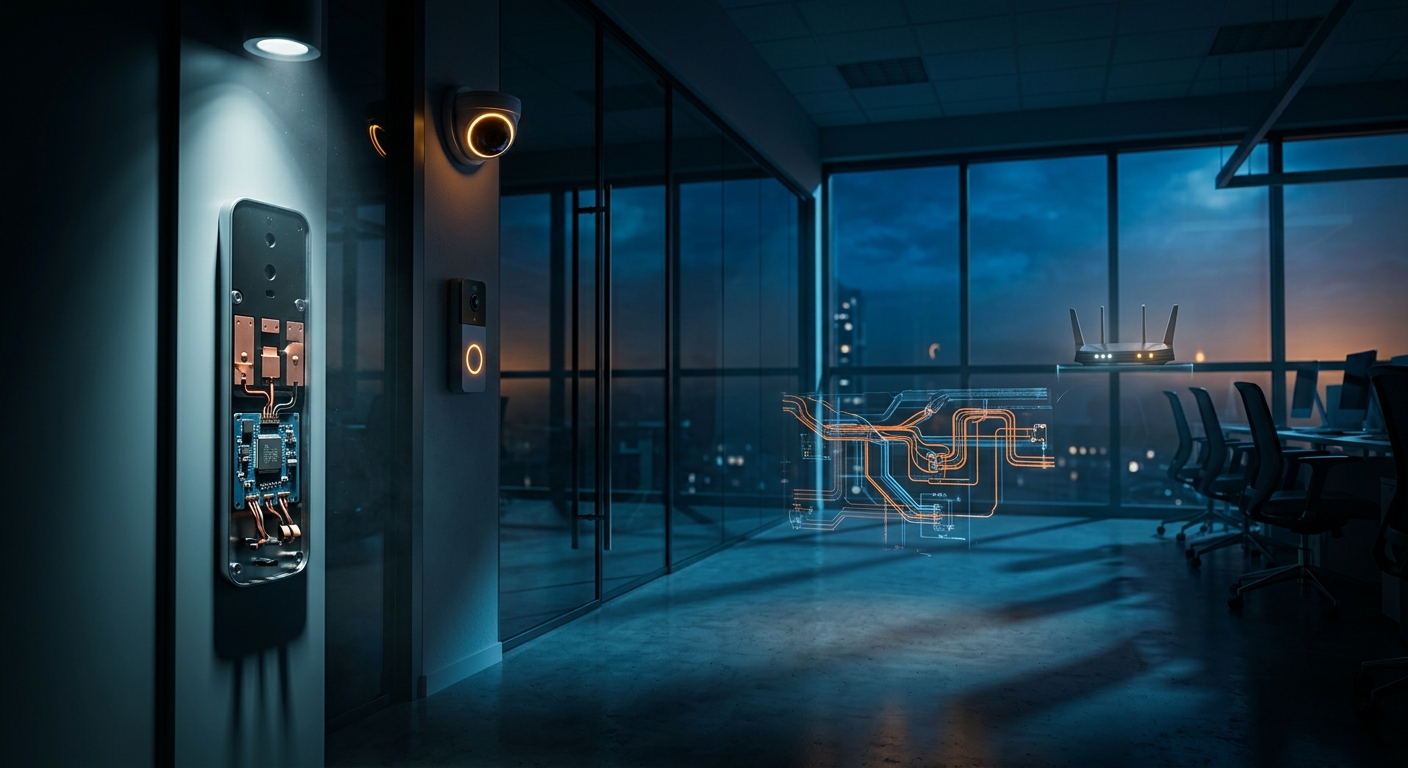
Over the past decade, millions of solar inverters, battery storage systems, smart meters, and grid-edge management devices have been connected to the internet as part of distributed energy resource (DER) programs, demand response schemes, and smart building deployments. Each one is a networked device. Each one runs firmware. Each one has a management interface. And increasingly, each one is a target.
Security researchers and pv magazine’s April 6 threat analysis documented emerging attacks on exactly these systems — and the picture it paints is of a critical infrastructure attack surface that has been built at enormous scale without commensurate security investment.
The Scale of the Exposed Surface
The numbers are striking.
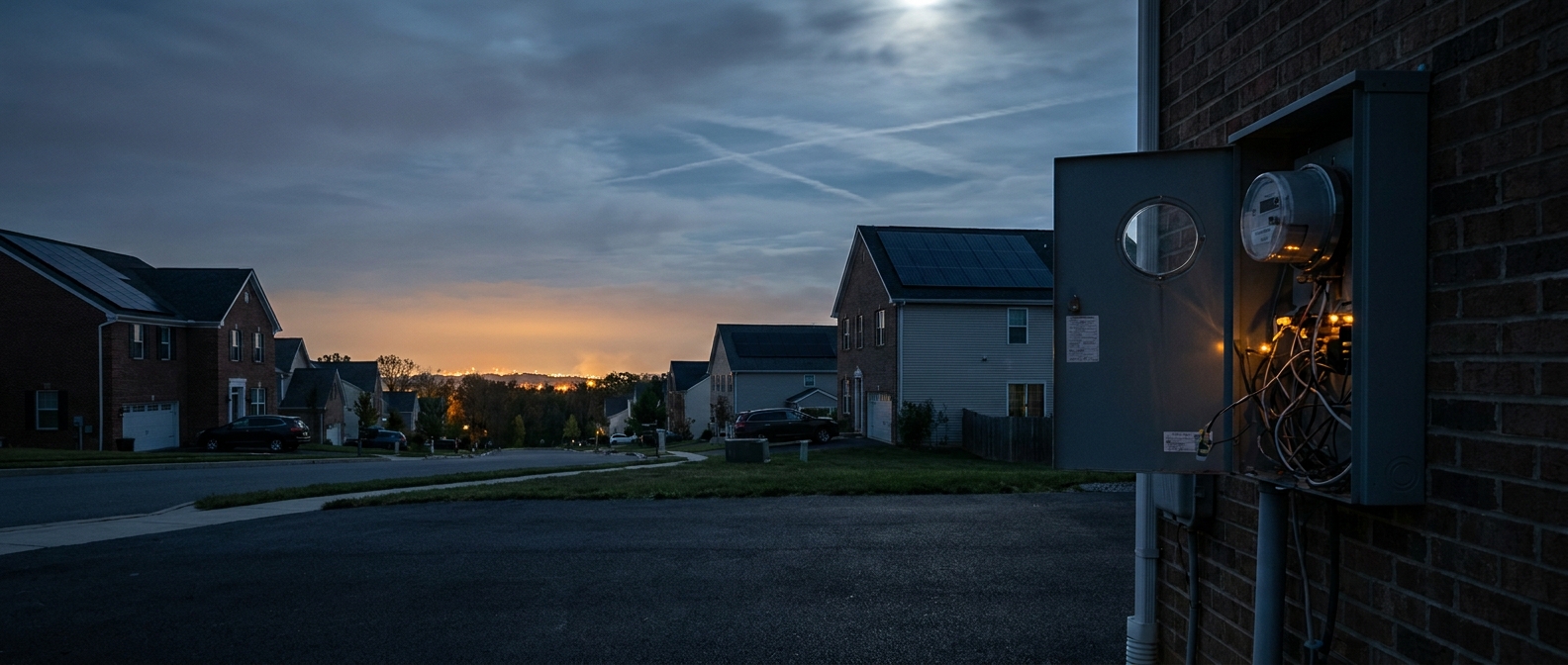
There are now an estimated 270 million smart meters deployed globally, with the United States alone having passed 115 million residential smart meter installations. The vast majority of these devices communicate over mesh radio networks or cellular, have firmware update capabilities, and are managed through cloud platforms.
Solar inverter deployments have grown even faster. The leading inverter manufacturers — Huawei, SMA, Enphase, SolarEdge, Fronius — have tens of millions of internet-connected units in the field. Most inverters include web-based management interfaces, cloud connectivity for monitoring and optimization, and remote firmware update capabilities.
Commercial and industrial battery storage systems — increasingly common in enterprise facilities seeking to reduce demand charges and provide backup power — typically include sophisticated energy management systems with internet connectivity, remote monitoring, and in some cases, grid-interactive features that allow external systems to control charge and discharge cycles.
Building energy management systems (BEMS) integrate all of these elements — solar, storage, smart meters, HVAC, and lighting — into unified control platforms that increasingly have cloud connectivity and vendor remote access.
The result is a distributed computing infrastructure of enormous scale, managing significant physical processes, with connectivity and attack surfaces that were designed for convenience and monitoring — not for defense.
What the Vulnerabilities Look Like
Security researchers have identified several categories of vulnerability across grid-edge devices that are being actively investigated and, in some cases, actively exploited.
Unauthenticated remote access to inverter management interfaces. Several major solar inverter models have been found to expose web-based management interfaces on the internet without requiring authentication, or with authentication that can be bypassed through known techniques. An attacker with access to these interfaces can modify inverter operating parameters — including curtailing or maximizing power output, adjusting voltage and frequency setpoints, and in some cases commanding the inverter to disconnect from the grid entirely.
Insecure firmware update mechanisms. Multiple grid-edge device manufacturers have implemented firmware update processes that do not cryptographically verify the integrity or authenticity of update packages. An attacker positioned on the network path between the device and the update server — or who compromises the update server itself — can deliver malicious firmware to devices in the field.
Cloud platform vulnerabilities. The cloud management platforms used by inverter manufacturers and energy management system vendors represent aggregated attack surfaces. A compromise of Enphase’s cloud platform, for example, could theoretically affect the management of millions of individual inverter installations. Researchers have found API vulnerabilities, insecure authorization schemes, and inadequate tenant isolation in several such platforms.
Smart meter protocol weaknesses. The Advanced Metering Infrastructure (AMI) networks used to communicate with smart meters use a variety of protocols including ANSI C12.22, DLMS/COSEM, and vendor-specific implementations. Researchers have demonstrated that weaknesses in some implementations allow for meter data spoofing, false demand readings, and in some cases remote disconnection of service — the same function utilities use for non-payment disconnection, available to an unauthorized attacker.
Grid-interactive device manipulation. The most concerning scenario involves large-scale coordinated manipulation of grid-interactive devices. A threat actor who controls thousands of solar inverters in a specific geographic area can potentially cause grid instability by simultaneously curtailing or maximizing power injection — creating imbalances that grid operators must respond to in real time.
Nation-State Interest in Grid-Edge Attacks
The interest in grid-edge devices is not theoretical. Multiple intelligence agencies and security firms have documented nation-state reconnaissance of renewable energy infrastructure.
Chinese threat actors have shown consistent interest in energy infrastructure that could be disrupted during a geopolitical crisis. VOLT TYPHOON’s documented pre-positioning in US critical infrastructure — including energy systems — has focused heavily on understanding how US power infrastructure responds to stress. Grid-edge devices are an attractive target because disrupting them at scale could cause grid instability without requiring intrusion into tightly controlled utility OT networks.
Russian threat actors, particularly Sandworm, have demonstrated willingness and capability to attack power grid infrastructure, as evidenced by the 2015 and 2016 Ukraine blackout attacks. As renewable penetration of European grids has grown, the attack surface for grid destabilization has shifted toward distributed grid-edge devices.
Iranian threat actors, as evidenced by the CISA advisory published three days ago, are actively targeting energy sector infrastructure. While the current confirmed operations focus on PLCs at traditional utilities, the same threat actors have reconnaissance interest in grid-edge systems.
The geopolitical context of 2026 — with ongoing conflict in the Middle East, continued tension over Taiwan, and sustained cyber operations against Western infrastructure — creates elevated risk for grid-edge attacks as tools of coercion or disruption.
The Enterprise and Commercial Building Angle
This is not only a utility problem. Enterprise and commercial building operators face direct exposure.
Solar installations on commercial facilities are now widespread. Warehouses, manufacturing plants, office buildings, data centers, and retail facilities across the US and Europe have rooftop solar with grid-interactive inverters. The security of those inverters is typically the responsibility of the building owner or facilities team — not the utility, and not the inverter manufacturer after installation.
Building energy management systems that integrate solar, storage, and demand response create a single management interface that, if compromised, could allow an attacker to manipulate energy flows across the entire facility. In a manufacturing environment, this could disrupt production. In a data center, it could affect cooling and power availability. In a hospital, the consequences are more serious.
Demand response participation — where commercial facilities agree to reduce consumption during grid stress events in exchange for payments — typically involves the utility or aggregator having some degree of remote control over building systems. The security of that remote access channel is often not well understood by the facility.
Battery storage systems in commercial facilities may be grid-interactive, meaning they can inject power to the grid as well as consume it. Unauthorized manipulation of discharge timing and power levels is not just an operational issue — it is a potential grid stability issue at sufficient scale.
What Building and Facility Operators Should Do
1. Audit your internet-facing energy devices. If you have solar inverters, battery storage, smart meters, or a BEMS with cloud connectivity, map what external access exists for each system. Who can reach the management interface? From where? With what authentication?
2. Disable or restrict remote management where not needed. Many solar inverters ship with remote management enabled by default. If you are not using the cloud monitoring platform or vendor remote access functions, disable them. A device that isn’t reachable from the internet cannot be attacked from the internet.
3. Verify firmware currency on all grid-edge devices. Check manufacturer security advisories for your specific inverter models and energy management platforms. Many manufacturers have released security patches that installers have not applied.
4. Segment energy management systems. Your BEMS, inverter management systems, and related energy infrastructure should be on a separate network segment from your corporate IT network. Compromise of one segment should not grant access to the other.
5. Review vendor remote access agreements. Understand what remote access your inverter manufacturer or energy management vendor retains after installation. Ensure that access is authenticated, logged, and can be terminated if needed.
6. Engage your utility on DER security. If you participate in demand response programs or export power to the grid, your utility should have guidance on the security requirements for grid-interactive devices. Many utilities are developing or updating these requirements — it is worth understanding what’s expected.
7. Include grid-edge devices in your security monitoring. Energy management systems generate logs. Those logs should be going somewhere — either to your SIEM or to a managed security service that monitors for anomalous behavior. An inverter that suddenly starts manipulating setpoints at 3am is an event worth investigating.
The Regulatory Trajectory
Regulators are beginning to catch up with the security implications of distributed energy resources.
NERC CIP (Critical Infrastructure Protection) standards, historically focused on bulk electric system operators, are being extended to cover distributed energy resources as their penetration increases. Compliance timelines are still being developed, but the direction is clear: grid-interactive devices will face regulatory security requirements.
FERC has issued notices of proposed rulemaking on DER security requirements. The timeline for final rules is uncertain, but the regulatory pressure is building.
The EU’s NIS2 Directive and related energy sector regulations are creating cybersecurity requirements for energy companies that include their renewable generation assets.
For enterprise operators, the practical implication is that the regulatory floor for grid-edge device security is going up. Getting ahead of these requirements — rather than scrambling to comply when they take effect — is the more cost-effective approach.
The Uncomfortable Arithmetic
The arithmetic of grid-edge security is uncomfortable: there are tens of millions of internet-connected devices managing real power flows, most of them installed with minimal security hardening, managed by cloud platforms with varying security maturity, and covered by regulatory requirements that are still catching up to the technology.
The same distributed architecture that makes renewable energy resilient in some dimensions — no single point of failure, geographic diversity, local generation — creates a distributed attack surface that is difficult to defend comprehensively.
The answer is not to stop deploying solar or smart meters. The answer is to take seriously that these devices are part of critical infrastructure, apply the same security discipline to them that we apply to traditional industrial control systems, and build security into procurement, installation, and ongoing management — not as an afterthought.
The threat actors have already noticed the attack surface. The question is whether defenders will catch up before a significant incident forces the lesson.
This article draws on security research published in pv magazine USA (April 6, 2026), recent CISA advisories, and threat intelligence from Dragos, Claroty, and academic research into distributed energy resource security. Specific vulnerability details are described at a level appropriate for security awareness; technical exploitation details have been omitted consistent with responsible disclosure principles.