The South Pars Strike: How Attacking the World’s Largest Gas Field Just Put Half the Planet’s Energy at Risk
On March 18, 2026, Israeli aircraft struck the South Pars gas field — the single largest natural gas reservoir on Earth. It was, by any measure, the most consequential energy infrastructure attack since the war with Iran began on February 28.
But here’s what makes this strike different from every other target hit in three weeks of war: South Pars isn’t just Iranian.
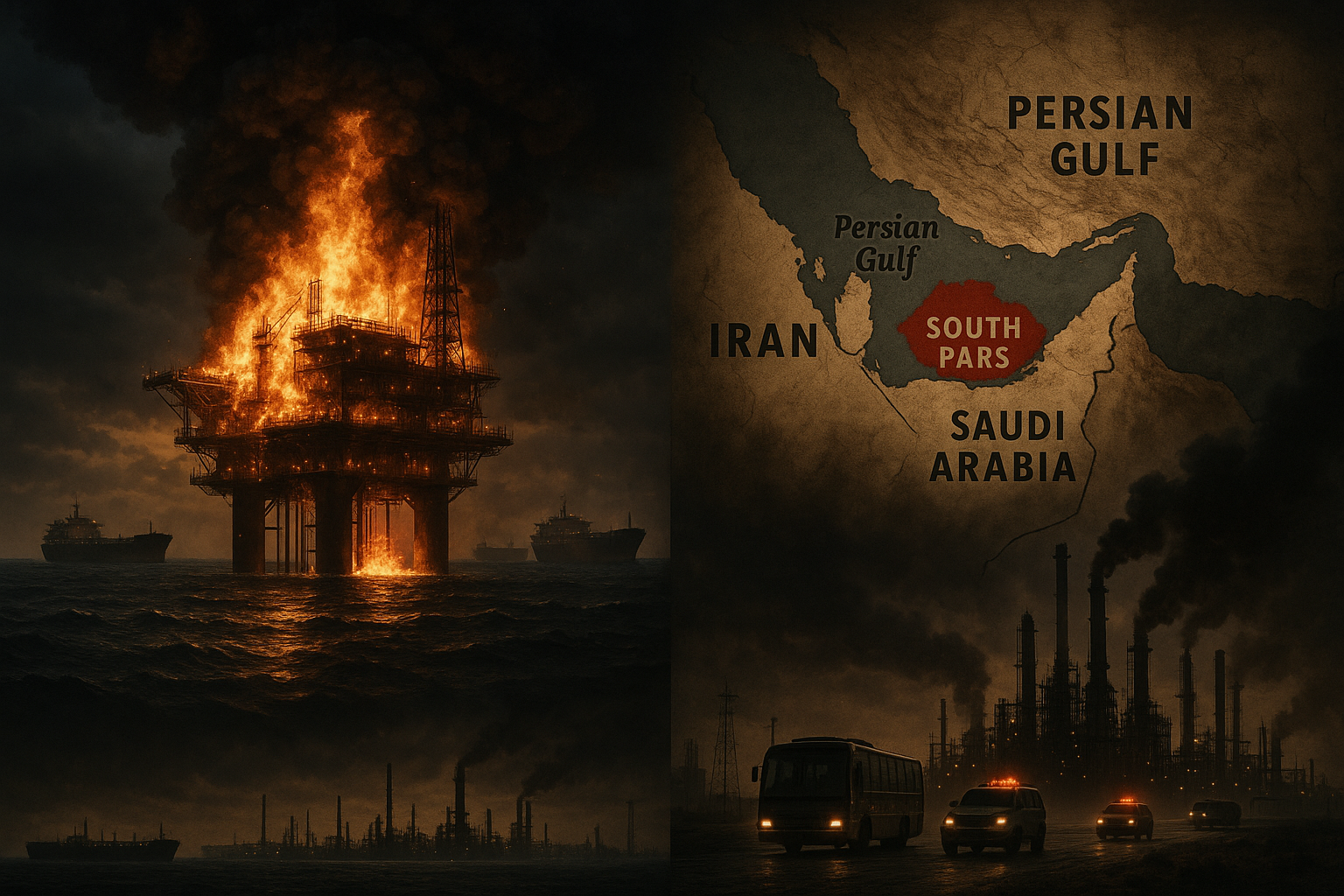
The South Pars gas field is the southern half of a geological formation that extends under the Persian Gulf. The northern half is called the North Field — and it belongs to Qatar, one of America’s closest Gulf allies and host to Al Udeid Air Base, the largest U.S. military installation in the Middle East.
Israel didn’t just attack Iran. They attacked the shared energy backbone of the entire Gulf region. And the consequences are already cascading.
What Happened
The Strike
Israeli media, citing unnamed sources, confirmed that the Israeli Air Force struck facilities associated with Iran’s South Pars offshore gas field on March 18. Iranian state media reported damage to multiple facilities but no immediate casualties. A fire at the gasfield was brought under control.
This was the first targeted attack on Iran’s gas production infrastructure since the war began — previous strikes had focused on oil facilities, military targets, and strategic infrastructure.
Iran’s Response: “Coming Hours”
Within hours, the IRGC issued one of the most alarming declarations of the entire conflict:
All major energy facilities across the Gulf Cooperation Council (GCC) are now “direct and legitimate targets.”
Via Iran’s semi-official Tasnim news agency, Iranian authorities named five specific facilities that “will be targeted in the coming hours”:
- SAMREF refinery, Yanbu (Saudi Arabia) — A joint Saudi Aramco/ExxonMobil refinery processing 400,000 barrels per day
- Jubail petrochemical complex (Saudi Arabia) — One of the world’s largest petrochemical facilities
- Al Hosn gas field (UAE) — A major gas processing facility operated by ADNOC
- Ras Laffan refinery (Qatar) — The beating heart of Qatar’s LNG export complex
- Mesaieed petrochemical complex (Qatar) — QatarEnergy’s flagship industrial city
The IRGC said “coming hours.” Not days. Not weeks. Hours.
Aramco Evacuates
Saudi Aramco has already evacuated workers from the SAMREF refinery in Yanbu. When the most valuable company on the planet starts pulling people out of facilities, they know what’s coming.
Multiple explosions were reported in Riyadh, confirmed by Reuters, AFP, and AP, with sirens sounding in the Saudi capital.
Qatar Condemns Israel
Qatar’s Foreign Ministry spokesman Majed al-Ansari publicly condemned the Israeli attack as a “dangerous and irresponsible step” — pointedly blaming Israel without mentioning any U.S. role. He noted that South Pars is an extension of Qatar’s own North Field, meaning the strike directly threatened Qatari interests.
“Targeting energy infrastructure constitutes a threat to global energy security, as well as to the peoples of the region and its environment,” al-Ansari stated.
When your own Gulf allies are condemning your strikes, the strategic calculus has fundamentally changed.
Why This Changes Everything
The Shared Reservoir Problem
South Pars and Qatar’s North Field are the same geological formation — the largest non-associated gas field in the world, containing an estimated 1,800 trillion cubic feet of natural gas and 50 billion barrels of natural gas condensates.
Iran controls the southern portion (South Pars). Qatar controls the northern portion (North Field). They share the same reservoir.
Attacking South Pars infrastructure doesn’t just damage Iranian gas production. It:
- Raises the possibility of subsurface damage affecting the shared reservoir
- Creates environmental contamination risks for the entire Persian Gulf
- Directly threatens Qatar’s most valuable economic asset
- Gives Iran the political justification to claim its Gulf neighbors are now targets because they host the coalition attacking shared infrastructure
The Scale of What’s at Risk
Let the numbers sink in:
Qatar’s Ras Laffan Complex:
- World’s largest LNG export facility
- Supplies approximately 30% of global liquefied natural gas
- If hit, Europe’s heating supply is disrupted overnight — not in months
Saudi Aramco:
- Most valuable company on Earth (~$1.8 trillion)
- Processes 12 million barrels of oil per day
- One successful strike on key facilities takes 10% of global oil supply offline
The 2019 Precedent:
- A single drone attack on Aramco’s Abqaiq facility in 2019 knocked out 5.7 million barrels per day of processing capacity
- Oil prices surged 15% in one trading session
- Iran now has 10x the motivation and nothing left to lose
The Strait of Hormuz:
- Iran has already effectively closed the strait — the chokepoint for one-fifth of global oil and LNG transit
- Energy prices are already soaring
- If Gulf production facilities are also hit, the supply disruption compounds
The Strategic Logic Failure
Follow the chain of consequences:
- You bomb a gas field jointly owned with Qatar — your own Gulf ally
- Qatar — host to your largest military base in the region — publicly condemns you
- Iran uses the attack as justification to target all Gulf energy infrastructure
- The IRGC formally declares Gulf facilities as “legitimate targets”
- Saudi Aramco starts evacuating refineries
- Explosions hit Riyadh
- Six Gulf nations scramble to protect their oil fields from an attack they believe is imminent
This is no longer a war between the U.S./Israel and Iran. It’s a conflict that has just threatened to erase the energy infrastructure that powers half the planet.
The Physical-Cyber Convergence
For security professionals, this escalation highlights the most dangerous trend in critical infrastructure protection: the convergence of physical and cyber attacks on energy systems.
Iranian Hackers Already Hit Aramco
Iranian threat actors have already targeted Saudi Aramco’s digital systems — posting images and issuing threats to paralyze their infrastructure. This follows a long history:
- 2012 Shamoon attack: Iranian hackers destroyed 35,000 Aramco workstations in a single operation
- 2017 Triton/TRISIS: Malware targeting safety systems at a Saudi petrochemical plant
- 2026: Iranian hackers posting intrusion evidence from Aramco networks
The Compound Threat
The nightmare scenario for Gulf energy infrastructure is now a combined kinetic and cyber attack:
- Physical strike damages production facilities (drones, missiles, sabotage)
- Simultaneous cyberattack disrupts SCADA/ICS systems controlling remaining facilities
- Safety systems compromised to prevent safe shutdown procedures
- Recovery delayed because digital systems needed for damage assessment and restart are offline
This is not theoretical. Every component of this scenario has been demonstrated individually. The South Pars strike and IRGC threat bring them closer to simultaneous execution than ever before.
What Security Teams Should Do Now
If You’re in Energy or Critical Infrastructure
-
Assume you are a target. If your organization has any connection to Gulf energy — production, refining, transport, trading — treat the IRGC’s threat as credible and imminent
-
Activate crisis management protocols. Don’t wait for an incident. Pre-position response teams, verify communication channels, confirm evacuation procedures
-
Harden OT/ICS networks. Segment operational technology from IT networks. Verify all remote access is secured. Disable unnecessary remote connections to SCADA systems
-
Monitor for Iranian threat indicators. CISA has published extensive guidance on Iranian threat actors targeting energy infrastructure. Deploy the IOCs now
-
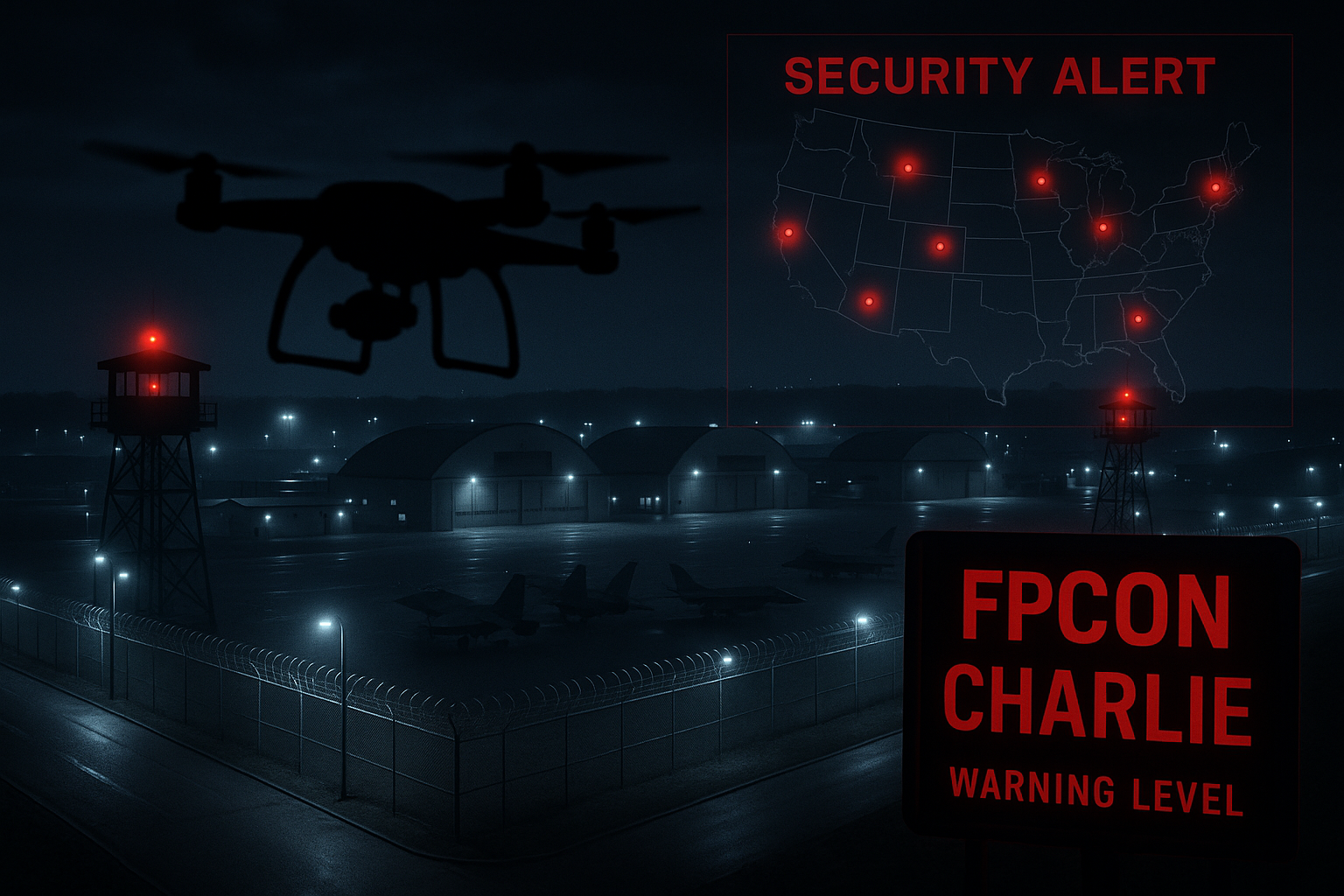
Verify physical security. Drone detection, perimeter monitoring, access control verification. The physical and cyber domains are converging
-
Coordinate with government. CISA, FBI, and sector-specific ISACs should be on speed dial. Share threat intelligence bidirectionally
If You’re in Supply Chain or Logistics
-
Map your energy dependency. Which of your operations depend on Gulf-sourced energy? What happens if supply is disrupted?
-
Activate business continuity plans. If 10% of global oil goes offline and LNG supply to Europe is disrupted, the economic cascading effects will hit every industry
-
Monitor shipping routes. The Strait of Hormuz closure plus potential attacks on Gulf port facilities affects global shipping
If You’re a CISO at Any Organization
-
Brief your board on the geopolitical risk environment. This isn’t just an energy sector problem — economic disruption cascades everywhere
-
Review insurance coverage for cyber incidents related to state-sponsored attacks. Many policies have war exclusion clauses
-
Monitor Akamai’s 245% attack increase data. The cyber escalation parallels the kinetic one. Your organization doesn’t need to be in energy to be caught in the crossfire
The Bottom Line
The South Pars strike crossed a line that previous attacks hadn’t: it hit shared infrastructure that belongs to both Iran and a U.S. ally. Qatar’s condemnation — blaming Israel directly — signals a fracture in the coalition. The IRGC’s threat to hit five specific Gulf facilities “in coming hours” is the most dangerous escalation since the war began.
When Saudi Aramco evacuates workers, they’re not posturing. They’re preparing for an attack on the most valuable energy infrastructure on the planet. If those attacks succeed — even partially — the energy supply implications are not regional. They’re global. They’re immediate. And they affect every person, business, and government that depends on Gulf energy.
This is what critical infrastructure security looks like when the stakes are existential. The physical security of energy installations, the cybersecurity of their control systems, and the geopolitical decisions of governments are no longer separate domains. They never were. South Pars just made it impossible to pretend otherwise.
Sources
- Al Jazeera, “Iran threatens to strike Gulf energy facilities after South Pars attack,” March 18, 2026
- Reuters, “Iran threatens Gulf energy targets after huge gas field is struck,” March 18, 2026
- The Guardian, “Israel strike on Iranian gas field reportedly coordinated with US; Tehran confirms intelligence minister killed,” March 18, 2026
- New York Times, “Iran’s South Pars Gas Field Is Attacked, Sending Energy Prices Soaring,” March 18, 2026
- New York Times Live Updates, “Iran’s Intelligence Chief Killed in Strike; Oil and Gas Prices Jump,” March 18, 2026
- Tasnim News Agency, “IRGC statement on Gulf energy facility targets,” March 18, 2026
- Qatar Ministry of Foreign Affairs, Majed al-Ansari statement, March 18, 2026